Complete Weapons Guide — 60+ Models, Stats & Top-Tier Loadouts
Blackfall: Cyborgs Down features over 60 distinct weapon models spread across multiple categories, each with unique handling characteristics, rarity tiers, and synergies with the game's four Valor Cyborg classes. This guide breaks down every weapon category, explains the rarity system, and recommends top-tier loadouts for tackling the toughest enemies on the island.
Weapon Categories Overview
The arsenal in Blackfall: Cyborgs Down spans a wide range of archetypes designed to complement different playstyles. Shotguns and submachine guns excel in close-quarters combat, assault rifles and blasters handle mid-range engagements, and precision rifles and railguns dominate at long distance. Explosive ordnance such as grenade launchers and recoilless rifles serves as heavy support for breaking through armored targets and exposing weak points on larger enemies like the Vox Engine.
Beyond conventional firearms, the game introduces specialized tech weapons—flamethrowers, directed-energy blasters, and the fan-favorite 'stinky gun'—that apply status effects or area denial. Each weapon model has distinct stats governing rate of fire, reload speed, effective range, and armor penetration. Understanding these stats is essential when pairing weapons with your chosen Valor Cyborg class, as certain classes amplify specific weapon traits through the 67-node skill tree.
Every weapon can be further modified through the crafting system, allowing players to tune attachments that shift a model's role. A standard assault rifle, for example, can be converted into a close-range shredder with a drum magazine and compensator, or pushed into a designated marksman role with an extended barrel and magnified optic.
Rarity Tiers and How They Affect Performance
Weapons in Blackfall: Cyborgs Down follow a multi-tier rarity system that directly impacts base stats and available modification slots. Common and Uncommon drops serve as early-game workhorses, offering reliable performance but limited upgrade potential. Rare and Epic variants introduce higher base damage, tighter spread, and additional attachment slots that open up more specialized builds. At the top of the hierarchy, Legendary weapons feature unique passive traits—such as bonus armor penetration or increased headshot multipliers—that cannot be replicated through crafting alone.
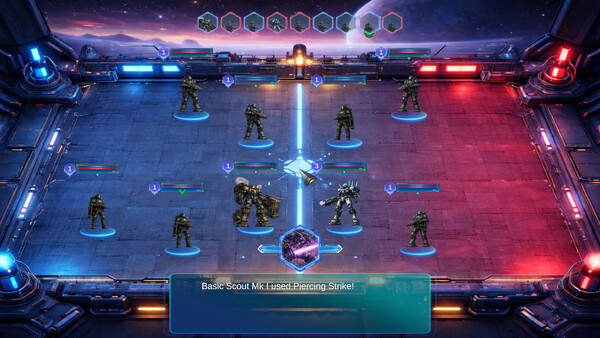
Rarity also plays a critical role in the turn-based 6v6 Prime Battle mode, where loadout efficiency determines how effectively your heavy mechs perform in prolonged engagements. Equipping higher-rarity weapons on your Valor Cyborg before triggering Prime Battle carries stat bonuses into the mech phase, making loot farming in the open-world missions a strategic investment rather than a purely cosmetic pursuit.
Best Weapons Against Key Enemy Types
Different enemy archetypes demand different weapon choices. Radicals are lightly armored, extremely fast melee-rushdown units that close distance aggressively and deploy smoke grenades to obscure your vision. Nearly any weapon can drop a Radical quickly thanks to their lack of protective plating—aim for headshots to eliminate them before they reach shotgun or melee range. Shotguns and high-RPM submachine guns work particularly well when a Radical slips through your perimeter.
Agitators present a more complex challenge. They wear heavier armor comparable to Overseer-class enemies, carry a single blaster arm, and can throw frag grenades. More dangerously, Agitators can hijack nearby automaton units and command them to focus fire on your squad. Prioritize Agitators with armor-piercing rifles or blasters to strip their plating, and eliminate them quickly to break the command link—once the Agitator falls, all hijacked automatons revert to their default, less aggressive behavior.
The Vox Engine is a heavily armored mechanical threat with multiple shielded weak points. The most effective strategy is to target the vulnerable panel underneath, then circle behind to hit two rear weak points, which causes an access hatch to open. Deliver a grenade, recoilless rifle round, or grenade launcher shot directly into the hatch for massive internal damage. While it is possible to expose a top-mounted hatch by destroying three upper weak points, the bottom-up approach is far more practical in the chaos of a firefight.
Optimal Loadouts by Class
With 18 Valor Cyborgs divided across four classes, loadout optimization depends heavily on your class role. Frontline assault classes benefit from pairing a high-damage shotgun or SMG as a primary with an explosive secondary for armored targets. Support-oriented classes should lean toward sustained-fire weapons like light machine guns or beam weapons, complementing the squad's damage output while using the skill tree to unlock ammo efficiency and cooldown reduction nodes.
Ranged specialist classes shine with precision rifles or railguns, particularly when skill tree nodes enhance critical hit damage and effective range. For these builds, carry a sidearm with strong hip-fire accuracy to handle Radical ambushes. Tank classes, meanwhile, maximize their survivability by equipping weapons with built-in crowd-control effects—flamethrowers for area denial or tech weapons that slow enemy movement—allowing them to hold chokepoints while teammates deal focused damage.
Regardless of class, every loadout should account for the transition into Prime Battle mode. Weapons with high burst damage and armor-penetration stats translate most effectively into the mech combat phase, so building your open-world loadout with Prime Battle viability in mind ensures you are never caught underpowered when the mode triggers.
Skill Tree Synergies and Weapon Mastery
The 67-node skill tree is not purely a character progression system—it directly interacts with weapon performance. Certain branches unlock passive bonuses tied to specific weapon categories, such as increased reload speed for shotguns or reduced recoil for automatic weapons. Planning your skill tree path alongside your preferred weapon loadout creates multiplicative gains that far outpace simply equipping higher-rarity gear.
Advanced players should also explore cross-category synergy nodes that reward switching between weapon types mid-combat. These nodes grant brief damage or speed buffs when swapping from a primary to a secondary weapon, encouraging dynamic play rather than reliance on a single firearm. Combined with the right rarity-tier weapons and class-specific abilities, a well-planned skill tree build can turn even mid-tier weapon models into top-tier performers capable of handling the most punishing encounters on the island.